|
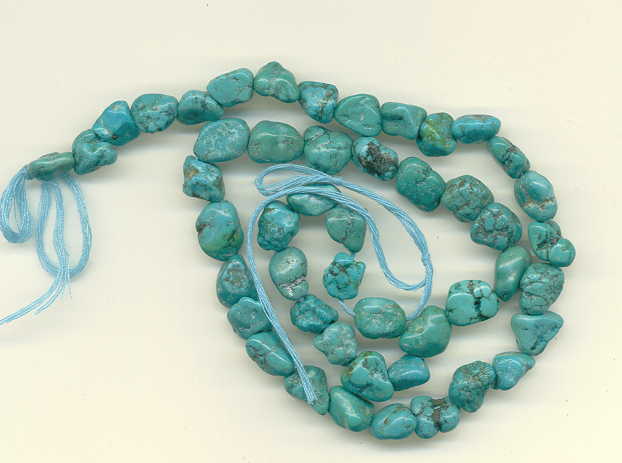
We've scanned a few images of the turquoise
we have in stock to give you a small idea of how different it is.
We stock Turquoise from Africa, China, Nepal (oh yes...Nepal), and America
Stock may be limited, so please be patient if an item is out of stock!
You may also want to see our Turquoise/Sterling Pendants All About Turquoise Mention Turquoise, and most people will probably think of Native American silver jewelry set with the sky blue gemstone. Turquoise has always been highly venerated in Native American traditions. It is an essential presence in the Shaman's medicine bag. It can be a simple nugget or bead, or it may be carved in the shape of a totem animal, and adorned with feathers and bits of stone tied to it with sinew. The Pueblo people often placed Turquoise in the floors of their dwellings to bring good fortune. Although Turquoise is closely identified with Native Americans, its lore and appreciation stretch across the globe. It was discovered by the ancient Egyptians around 3000 BC and was used widely in their finest jewelry and ornaments often combined with Lapis Lazuli and Carnelian as in the treasures of Tutankhamun's tomb. The Turquoise was carved into scarabs, and representations of the various gods and worn by the priests for ceremonial purposes. The ceramic Faience was developed by the Egyptians as an imitation for Turquoise and Lapis Lazuli. Old European traditions associate Turquoise with horses, and hold that the stone will protect horses from all sorts of ills. In particular, it was said to prevent them from drinking overly cold water while overheated and foundering. Turquoise was said to enable its wearer to resist evil and maintain virtue. It was credited with helping achieve a state of higher consciousness and resistance to weakness. It was also thought to protect its wearer from falling, particularly from towers and horses. Tibetans revere the stone and believe it represents good fortune, good health, and that it provides powerful protection against the evil eye. Turquoise is used in Tibetan healing ceremonies, where a Turquoise bead is thought to hold the shadow soul and draw out illness from the body. Buddhists associate Turquoise with knowledge of the future. Many Tibetans still wear necklaces with Turquoise, and coral beads which are hundreds of years old, and Turquoise often adorns ceremonial objects. In both Tibet and Nepal, Turquoise is highly esteemed and can also serve as currency. Today the major sources of Turquoise are Arizona, plus Australia, Chile, China, and Mexico. The stone often occurs with veins of matrix which add interest to its beauty. Body oils can sometimes cause Turquoise to turn green with time. It's the alternate birthstone for December. African Turquoise Actually, better put turquoise in mental quotes for this one - chemically, it's a jasper, rather than "true" turquoise, but it does have a similar look. Mined in Africa, mostly greens and a little rust with lots of matrix and black spots. African Turquoise Rounds
4mm = $6, 6mm = $8, 8mm = $10
10mm = $15.50, 12mm = $20 | 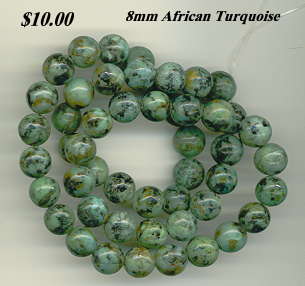 | 7-9mm Barrel Rondelle assorted
$25.00/strand, SOLD OUT | 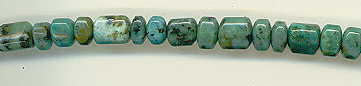 | American Turquoise Mined in America, mostly deep blues with matrix all throughout. 10mm Discs American Turquoise
Very Limited Supply!
From the Kingman (Arizona) mine very nice!
$110.00/strand |  |
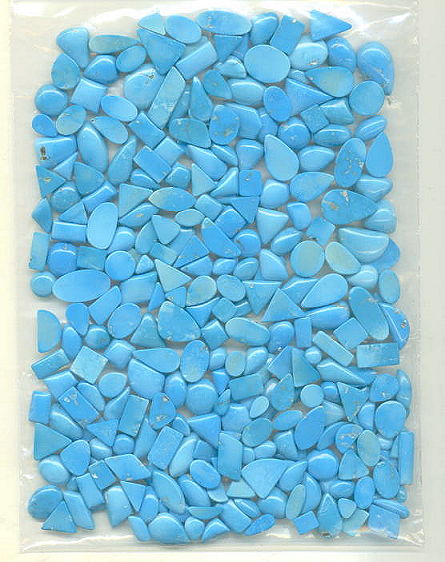
American Turquoise Cabachons
Sold by the gram in assortments.
$40.00 per bag of 10 grams assorted [20-30 cabs].
This photo shows WAY more than 10 grams
but we wanted to show you the variety.
5x7mm oval to 12x15mm triangle and in between
[Click on the picture to enlarge] | 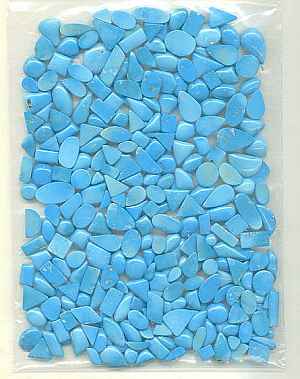 | Chinese Turquoise Mined in China, mostly light greens mixes with blue and yellow.
Not much matrix, with some exceptions. 25mm Turquoise Peace Sign Beads
Sold by the piece
$1.00 each
25mm x 4mm
Click on the picture to see a close-up | 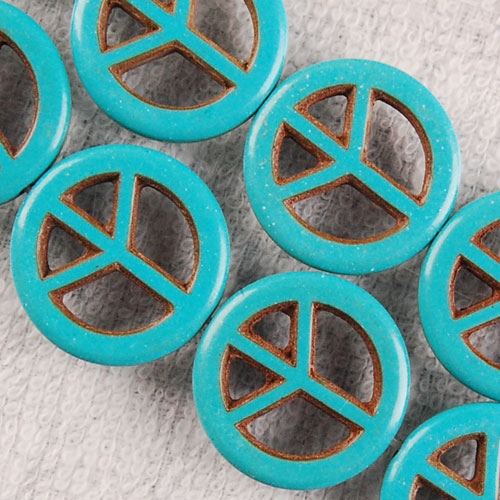 |
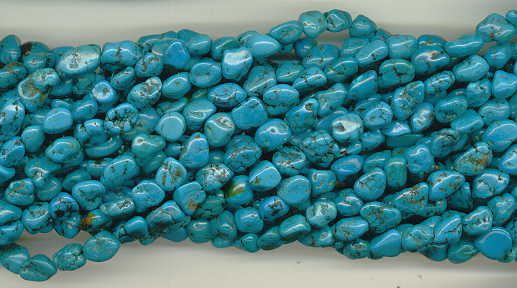
Blue (Enhanced) Nuggets
Medium 5-7mm - $18.00/strand
Gorgeous Color!
Click on the picture to see a close-up | 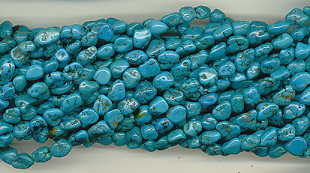 | 4-5mm Blue (Enhanced) Nuggets
Small Nuggets 4-5mm $15.00/strand
Gorgeous Color!
Click on the picture to see a close-up | 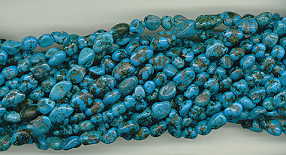 |
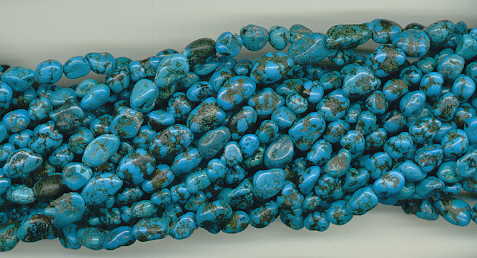
Blue (Enhanced) Nuggets
Medium 5-7mm - $18.00/strand
Gorgeous Color!
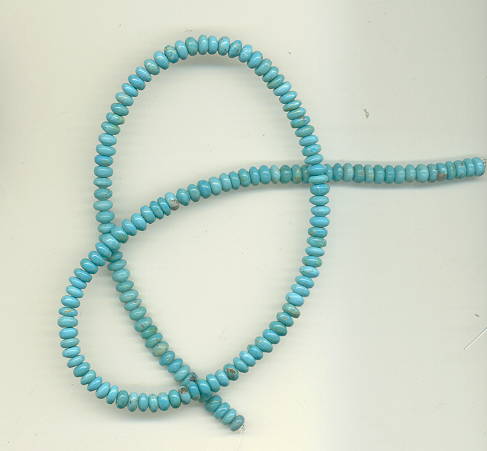
Click on the picture to see a close-up | | Chinese Turquoise 5mm Donut Rondelle
$15.00 per strand
Click on the picture to see a close up. | 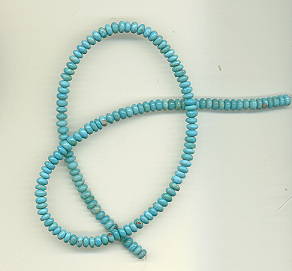 | Chinese Turquoise 10mm Round
$35.00 per strand
Other round sizes in stock: 8mm ($30)
6mm ($17) and 4mm ($16) | 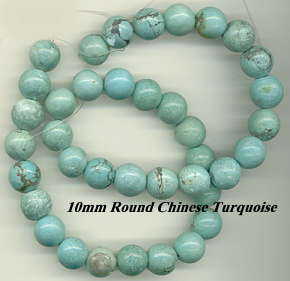 | Chinese Turquoise Skull Beads
18mm Beautiful!
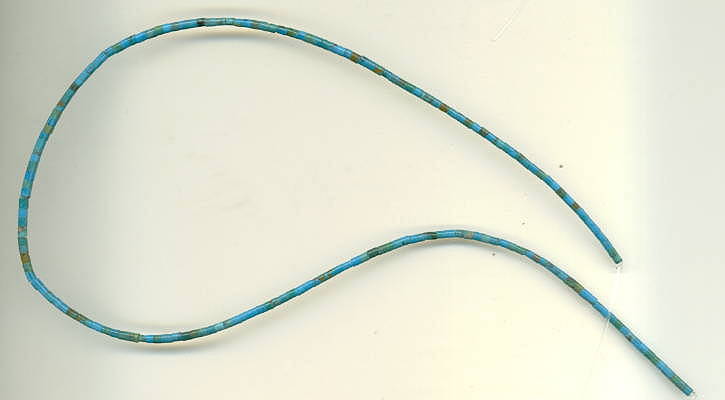
$3.00 each | 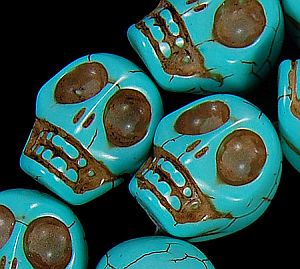 | Chinese Turquoise 2x2mm Heishi Tubes
Beautiful!
$15.00 per strand
Click on the picture to see a close up. | 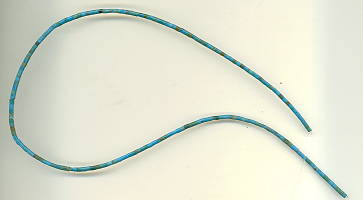 | Chinese Turquoise Cabachons
10x14mm Oval
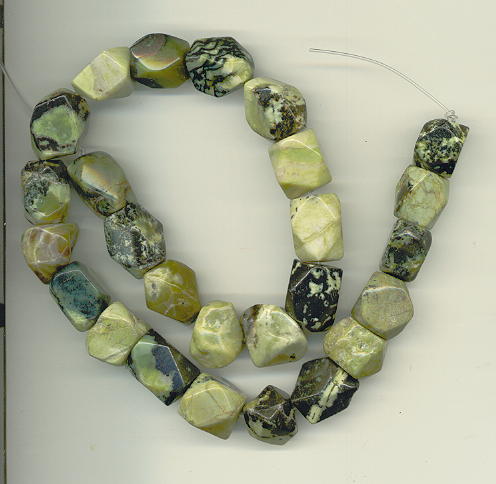
$42 per card [42 cabs] | 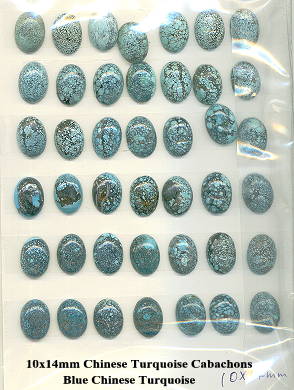 | Lemon Yellow Turquoise From China, mostly light yellow little green and black matrix. Lemon Yellow Faceted Nuggets
$25.00 per strand
Approx. 13x18mm (with variations)
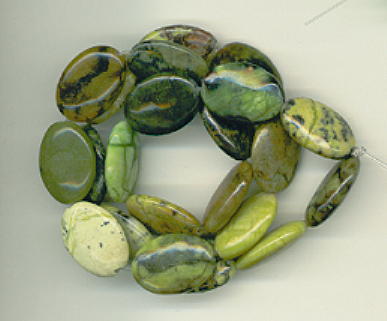
Click on the pic to see a close-up | 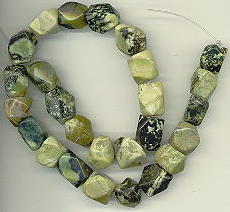 | Lemon Yellow Turquoise Flat Ovals
$20.00 per strand
Approx. 12x15mm (with variations)
Click on the pic to see a close-up | 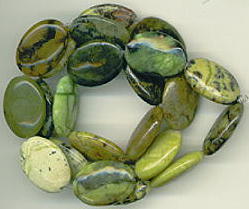 | Lemon Yellow Turquoise Rondelles
$20.00 per strand
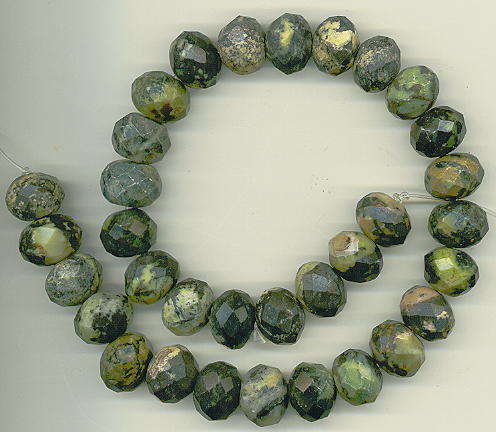
8mm | 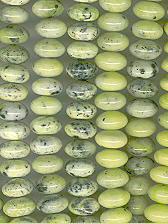 | Lemon Yellow Turquoise Faceted Rondelles
$35.00 per strand
14mm
Click on the pic to see a close-up | 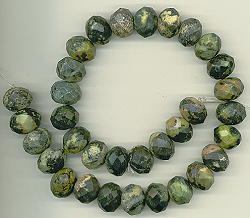 | Lemon Yellow Turquoise Rounds
Available in three sizes, 4mm, 6mm and 8mm. | 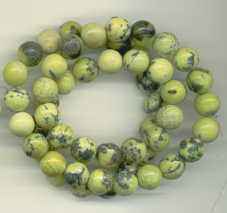 | Mexican Turquoise Mined in Mexico, at the Compitas mine, this turquoise resembles the deep blues of Sleeping Beauty with matrix all throughout. Some of these had already been made into finished necklaces, so have clasps on them. You can use them for the nuggets, or you can just sell them as is! 7-12mm Compitas Turquoise Nuggets
$22.00 per strand | 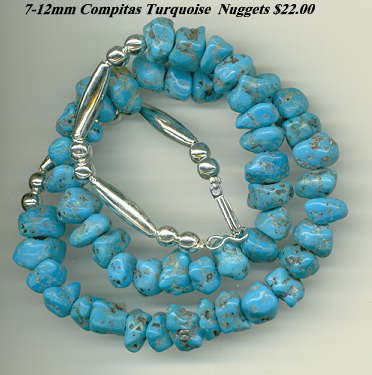 | Compitas Nuggets
sold loose: $1.00/gram
Size choices: 10-15mm and 12-25mm | 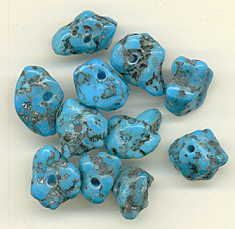 | 10-25mm Compitas Turquoise Nuggets
Graduated, 21" strand
$35.00 per strand | 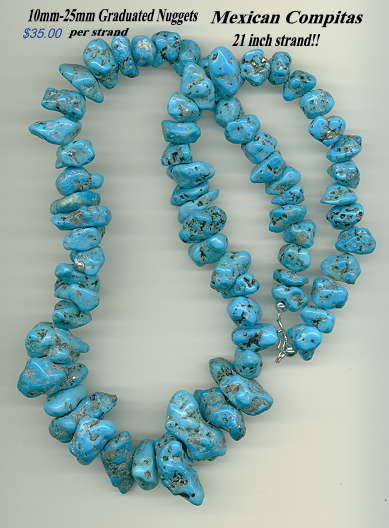 | Nepalese Turquoise Nuggets Never heard of these ourselves, but who are
we to argue with a monk?
Beautiful Blue/Green tones
Approx 7-9mm, slight variances in size.
$30.00 per strand
Click on the pic for a close-up | 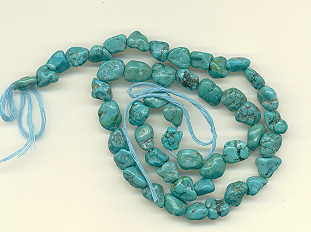 |
Persian Turquoise PERSIAN TURQUOISE CABACHONS. We got these from a collector's estate, who kept them under lock and key for many years. These are excellent for glueing onto any project and are all natural, no enhancements whatsoever. Assorted shapes and sizes. Sold by the CARAT in assortments. There are approximately 10-14 cabs in a 25 carat assortment. Size variances are anywhere from 5x7mm through 8x11mm and in between. $40.00 per bag (25 carats assorted). 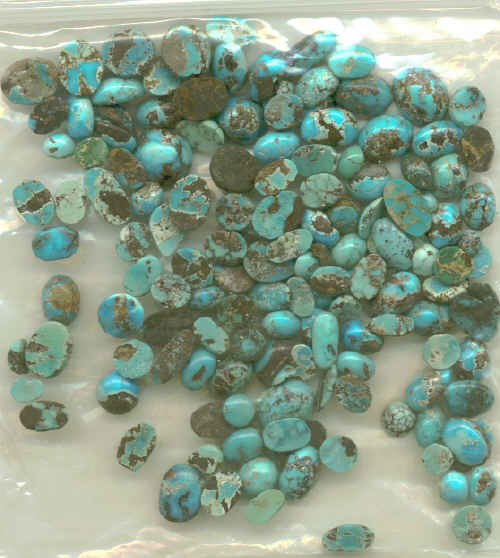
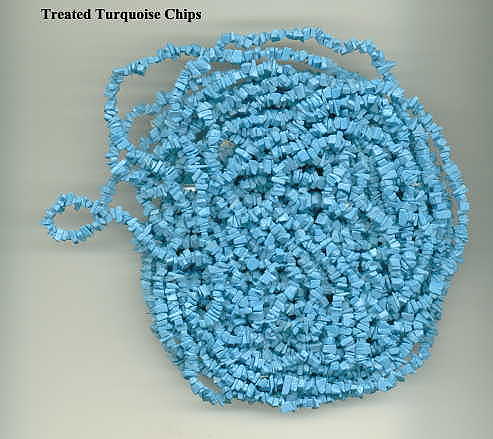
"Treated" Turquoise Chips Treated turquoise is a process by which the pore spaces of the stone are filled with a transparent substance such as mineral oil, paraffin, or plastic to improve the color, and make it more desirable. Not to be confused with Stabilized Turquoise, in which an epoxy resin or other substance is infused into the pores of the stone. No longer porous, its color will not change over time. Stabilization allows us to use turquoise that might otherwise not be suitable for jewelry. Treated turquoise, 36" chip strands
Beautiful light blue chips
Variances in sizes from 4-6mm.
$4.00 per strand
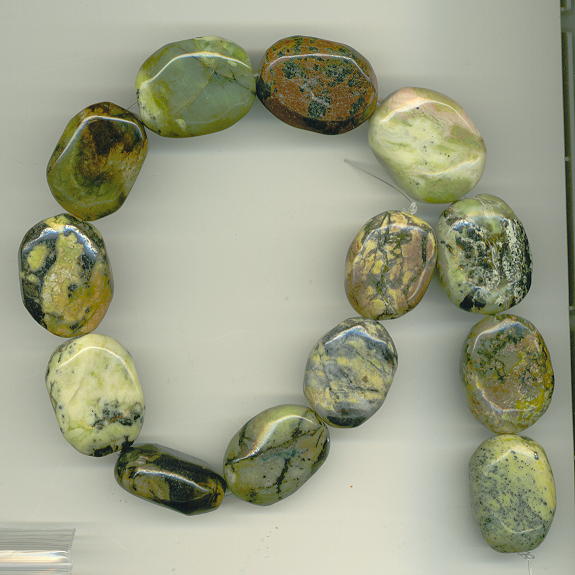
Click on the pic for a close-up look | 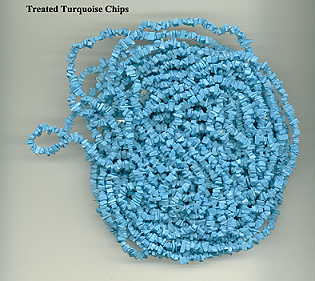 | Yellow Turquoise Yellow Turquoise is from China and is brand new on the scene, with its dark yellow/pea green tones. This shade is lovely and rare, with lots of variations and shades of yellows, greens and darker matrix. Very hard to find or even get information about this particular shade. Lovely for all types of jewelry. Make lovely center stones on any custom design. Virtually endless possibilities. Dark Yellow Turquoise Large Rounds.
Available in 12mm, 14mm, 16mm and 18mm.
Prices start at $30.00 per strand. | 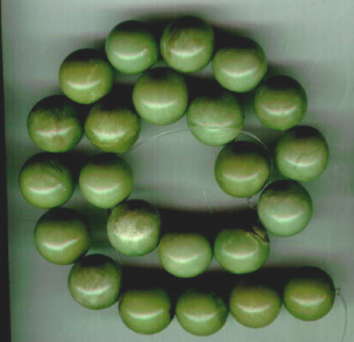 | Varietal Yellow Turquoise
Big Oval Nuggets
20x30mm Big Flat Ovals
$30.00 per strand
Click on the picture to see a close-up | 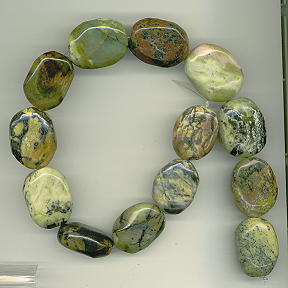 | Varietal Yellow Turquoise Small Rounds.
Available in 4mm, 6mm and 8mm.
4mm = $8, 6mm = $11, 8mm = $14 | 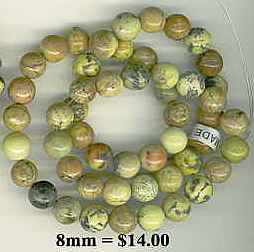 | Yellow Turquoise Cabachons
10x14mm Oval (pictured)
$42 per card [42 cabs]
8x10mm Oval
$25 per card [39 cabs] | 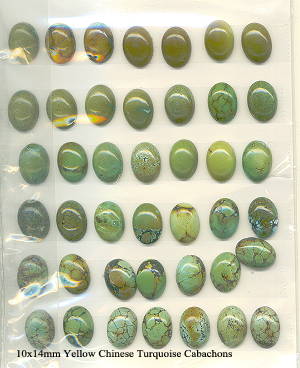 |
|
 Gemstones: BY STONE